




Inside this case study
Business context and challenge
Cost per in-app purchase fell from EGP1,398.61 to EGP84.92, a 93.9% reduction. Ahmed Osama led the work on a restaurant app serving one Egyptian city, focusing on purchases and campaign efficiency within a limited local audience.
Meta, AppsFlyer and the internal dashboard initially showed conflicting figures. Ahmed started with a full tracking and campaign audit, turning the identified issues into an implementation plan before expanding the advertising activity.
Ahmed Osama’s work
Ahmed Osama led the tracking audit, setup improvements and campaign restructuring. The work covered Meta Events and AppsFlyer event mapping, the iOS Facebook SDK and attribution setup, and product and category deep links.
Ahmed compared platform reporting with internal order data and reviewed the journey from ad to purchase. The execution combined technical measurement work with campaign management to support clearer reporting and better-informed marketing decisions.
Campaign details
Growing a restaurant app within one city
The project focused on increasing in-app orders within a tightly defined local service area. Ahmed Osama began by reviewing the full customer journey: from the advertisement to the correct product or category, through checkout and purchase tracking.
A full tracking audit and a stronger campaign setup
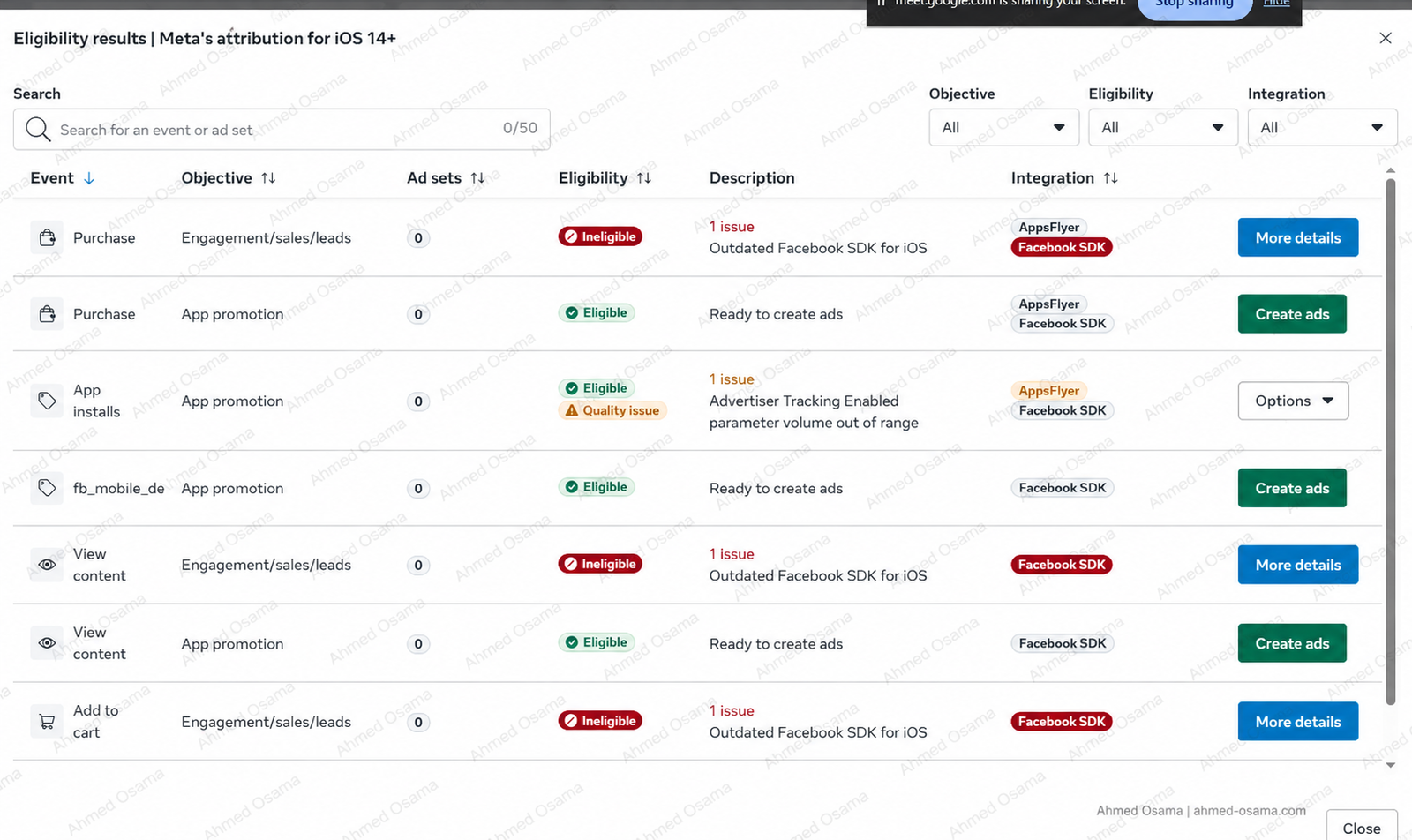
The audit identified an outdated Facebook SDK for iOS and quality issues affecting app events, including Purchase, View Content and Add to Cart. Ahmed reviewed the Meta–AppsFlyer integration and internal reporting, and worked on attribution settings and product and category deep links.
The work connected tracking, the purchase experience and campaign structure. Ahmed built the optimization plan around the actions that matter to the business, with clearer event data and a more direct path from ad to order.
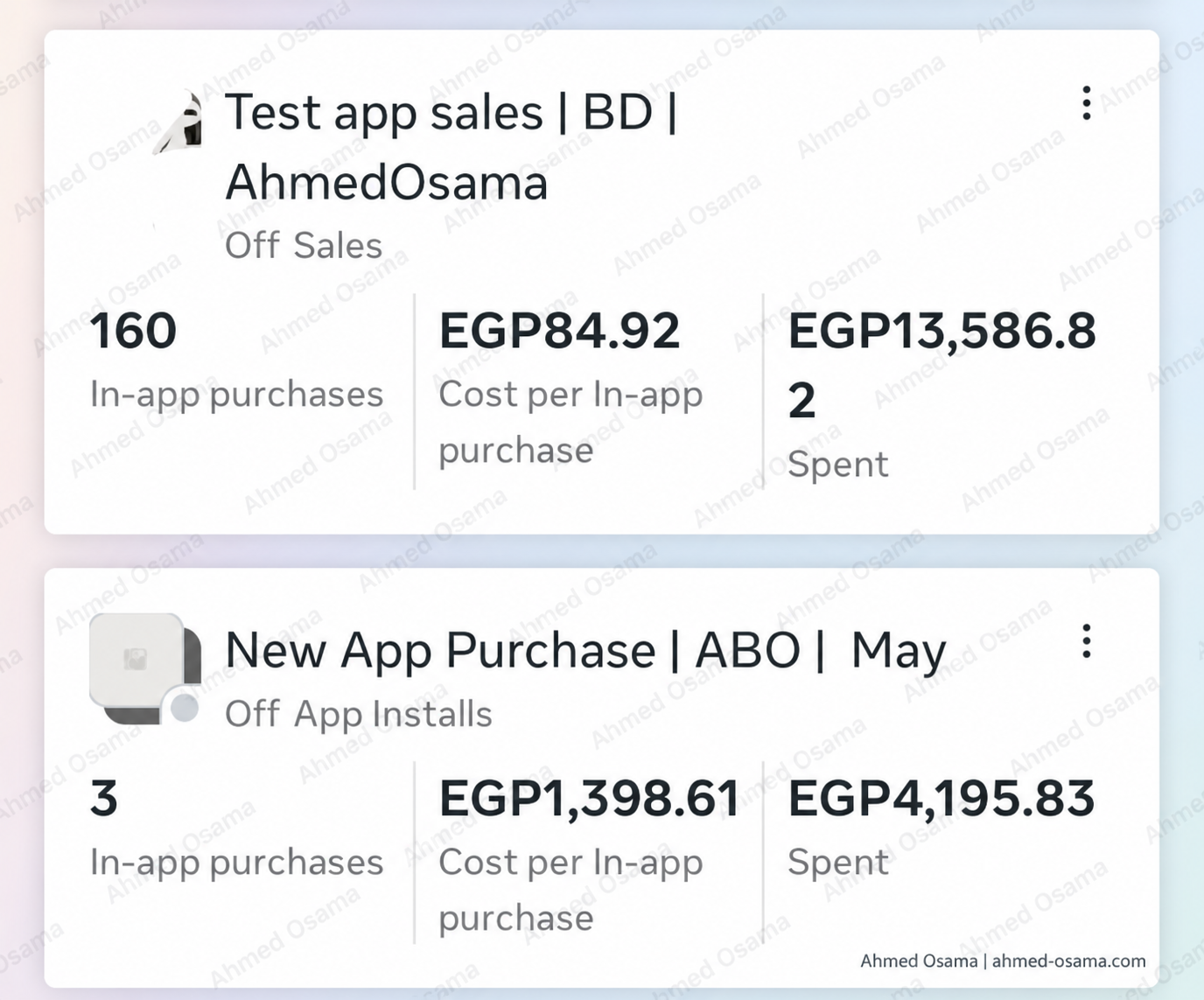
Before Ahmed’s work and after optimization: lower purchase cost
| Metric | Before Ahmed’s work | After optimization |
|---|---|---|
| Cost per in-app purchase | EGP1,398.61 | EGP84.92 |
| In-app purchases | 3 | 160 |
| Campaign spend | EGP4,195.83 | EGP13,586.82 |
| Campaign objective | App Installs | Sales |
Cost per in-app purchase fell from EGP1,398.61 to EGP84.92, a 93.9% reduction. The optimized sales campaign recorded 160 in-app purchases. The table shows each campaign’s spend and objective alongside the results, making the move toward purchase-focused advertising clear.
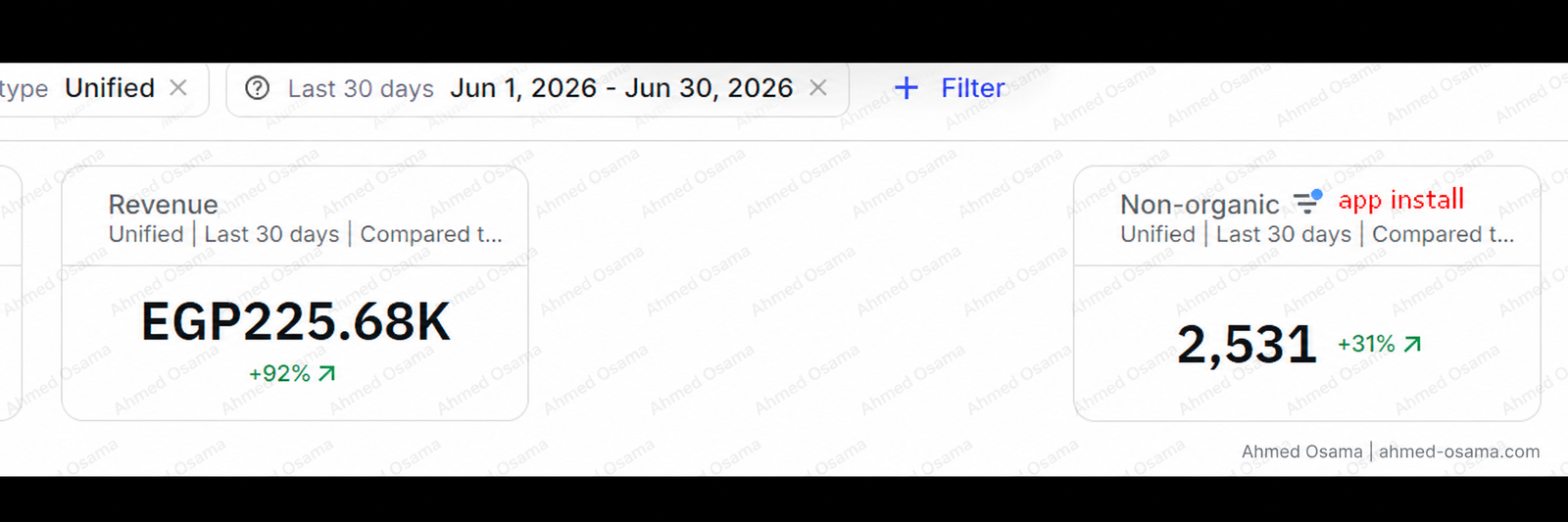
App revenue growth and stronger user acquisition
The monthly AppsFlyer app performance report records EGP225.68K in revenue, up 92%, alongside 2,531 non-organic installs, up 31%. These app-level indicators add a broader view of performance alongside Meta’s purchase campaign results.
Connecting measurement with marketing decisions
Ahmed reviewed event definitions and attribution settings across platforms, then compared campaign data with app and order-system reporting. This gave the team a clearer basis for reviewing performance and deciding what to improve. AppsFlyer’s guide to comparing Meta reports explains the measurement settings involved.
Taking customers from the ad to the right product
Ahmed worked on product and category deep links so customers could reach the intended content inside the app. This connected the advertisement with a more consistent purchase experience. See AppsFlyer’s deep linking documentation for direct and deferred app destinations.
Technical and marketing work with clear business outcomes
This project brought together Ahmed Osama’s tracking audit, setup improvements, customer-journey work and campaign restructuring. The campaign reports show lower purchase cost and in-app orders, with the app dashboard providing a broader view of growth within a limited local market.
Explore Ahmed Osama’s mobile app marketing services in Egypt and the GCC and media buying and paid advertising services to build a clearer plan for app purchases.
Why did Ahmed Osama begin this restaurant app project with a tracking audit?
Meta, AppsFlyer and the restaurant’s internal dashboard were showing different figures. Ahmed reviewed the iOS SDK, purchase and engagement events, attribution settings and product deep links before restructuring campaigns around in-app purchases. That connected measurement, the customer journey and media buying in one improvement plan.
What changed in the restaurant’s in-app purchase campaigns?
Cost per in-app purchase fell from EGP1,398.61 to EGP84.92, a 93.9% reduction. The optimized sales campaign recorded 160 in-app purchases. The comparison table and campaign screenshot above show the results alongside each campaign’s spend and objective for this restaurant serving one Egyptian city.
Explore more app sales projects
Read the Gulf ecommerce Meta Ads audience test with $28,550.14 in purchase value and the Kuwait Snapchat ecommerce case study to see more of Ahmed Osama’s work across apps and websites.
Documented results
The optimized sales campaign recorded 160 in-app purchases at EGP84.92 each, compared with EGP1,398.61 per purchase in the earlier campaign: a 93.9% reduction.
At app level, the monthly AppsFlyer report records EGP225.68K revenue, up 92%, alongside 2,531 non-organic installs, up 31%.

